
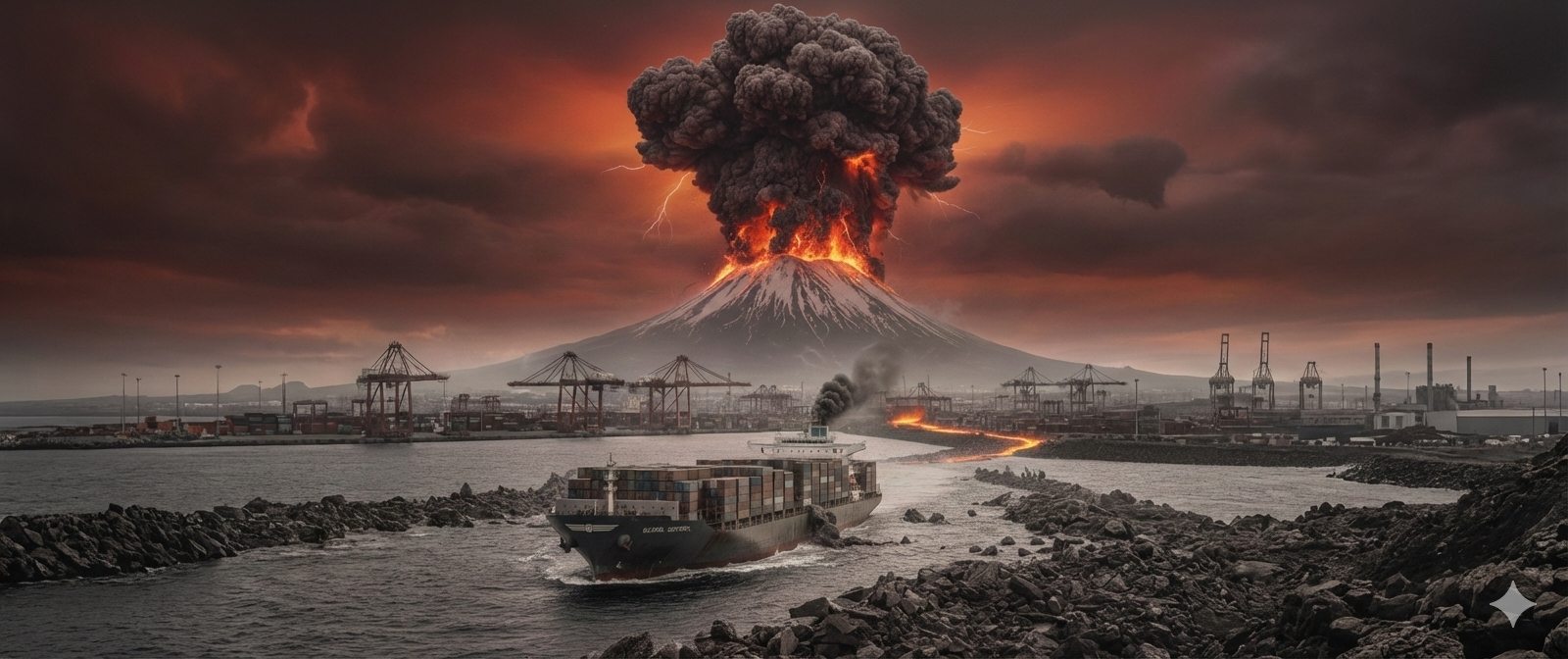
How a Volcano in Africa Can Disrupt Supply Chains in India, China, and Across the World
When
volcanic ash enters these skies, it doesn’t just disrupt aircraft. It disrupts
economies.
A single
ash plume can trigger:
•
Rerouted air cargo
• Flight cancellations
• Delayed shipments
• Production stoppages
• Higher freight and operating costs
What
starts in Africa becomes a supply challenge in Asia and a cost escalation
across Europe and the Middle East.
Modern
supply chains are lean and tightly synchronized. This makes them efficient and
extremely vulnerable.
Disruptions
are inevitable.
But the impact
depends on the capabilities of the people managing the supply chain.
Technology
matters, but in critical moments it is the judgment and agility of supply chain
professionals that determine whether an organization bends or breaks.
And this
isn’t a new conversation.
One
World, One Supply Chain. This was the theme of our Flagship event IPSC,
International Procurement and Supply Chain Conference, 2021 in Dubai during the
COVID-19 pandemic.
It was
relevant then, during one of the greatest supply chain disruptions in modern
history.
It is
relevant now.
And it
will continue to be relevant in the future.
Building the Capability That Matters
Organizations
don’t just need systems.
They need
people who can anticipate, adapt, and navigate uncertainty.
At Blue
Ocean, we prepare supply chain professionals to:
• Think
beyond borders
• Understand global interdependencies
• Build alternate routes and risk mitigation
strategies
• Strengthen forecasting and scenario planning
• Lead during uncertainty
• Turn disruptions into opportunities
Volcanoes
will erupt.
Weather will change.
Geopolitics will shift.
But the
organizations that thrive will be the ones that put capable people at the
center of their supply chain strategy.
Because
true resilience is not built in systems.
It is built in
people.