The FIFA World Cup 2026: The Massive Supply Chain Secret No One Sees
When the world tunes in for the FIFA World Cup, everyone is looking at the same things: the roar of the crowd, a perfectly placed pass, and those nail biting moments that turn players into legends. It is pure, unadulterated spectacle.
But there is a massive, invisible engine running that spectacle and, quite honestly, it is just as impressive as the matches themselves.
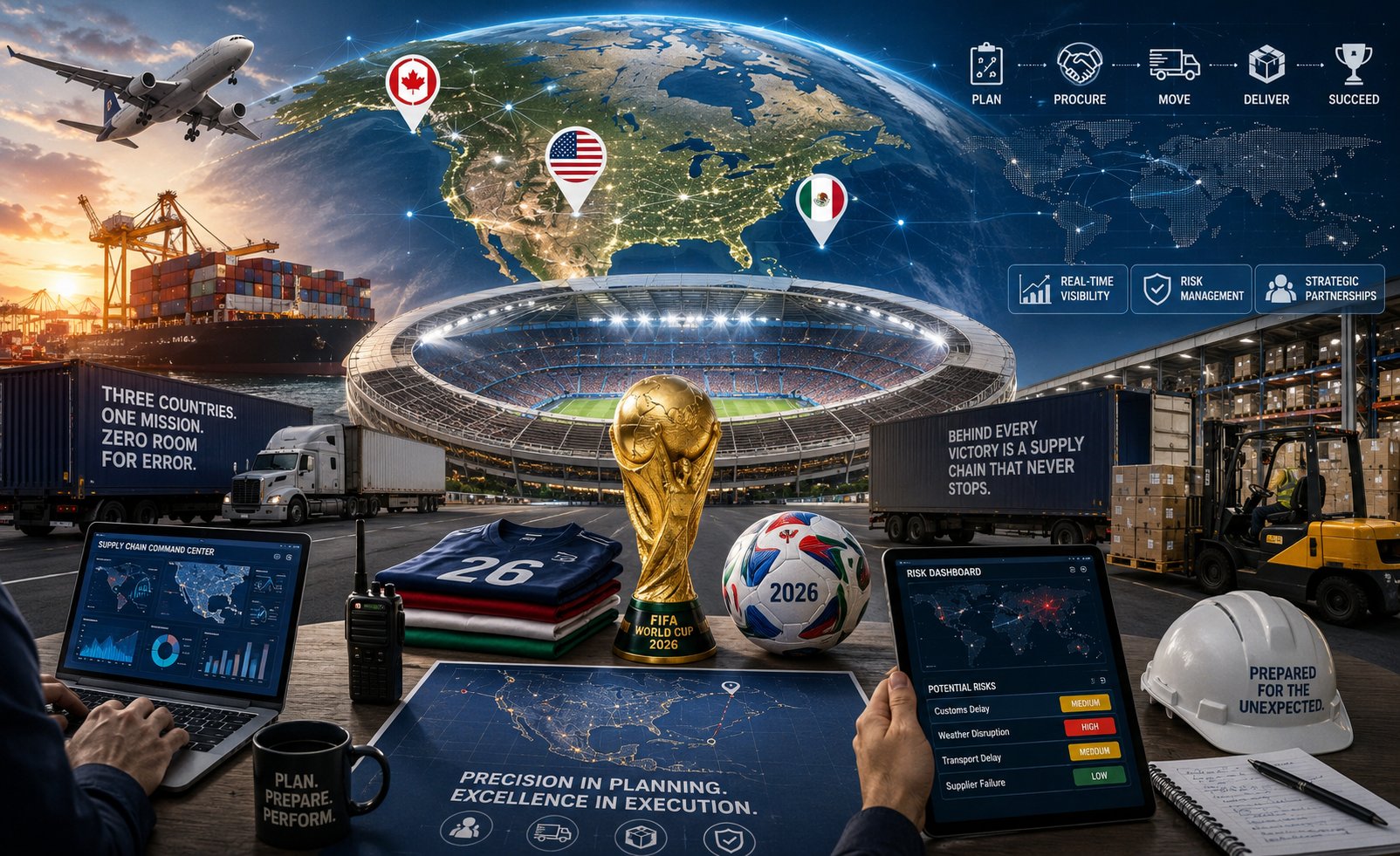
Before the referee even steps onto the pitch, a high stakes supply chain management operation has already crossed the finish line. We are talking about thousands of moving parts; jerseys, stadium tech, broadcast cables, specialized medical gear, and enough food and drink to keep several cities running. Hosting the 2026 World Cup across the U.S., Canada, and Mexico is less about sports and more about extreme global logistics.
The Magic of Invisible Logistics
For most fans, the tournament starts at the turnstiles. For a supply chain professional, the work started years ago.
The gold standard of this job? You should not notice it. When the stadium lights hit and the jerseys are waiting in the locker room, it feels effortless. But that effortlessness is actually the result of thousands of people wrangling customs forms, managing freight forwarding, and coordinating venue distribution down to the minute. When it goes right, it is invisible. When it goes wrong, the whole world knows about it.
Three Countries, One Massive Logistics Puzzle
Spanning three nations is a logistics nightmare. You are dealing with three different regulatory systems, wildly different infrastructure, and massive distances.
One hiccup…a customs delay or a broken link in a transport route, does not just stay in a warehouse. It ripples out. This is the big lesson here: logistics is not just moving boxes. It is about timing, real time visibility, and having the guts to build contingency plans for things that have not even gone wrong yet.
Procurement: Why Cheap is a Trap
If you think procurement is just about finding the lowest bidder, you are missing the point. At this level, failure is not an option. The best teams are not hunting for the best price tag; they are hunting for reliability. They treat suppliers like partners, not line items. When you build trust with your vendors, you do not just get goods delivered; you get a team that can help you pivot when the unexpected hits.
Data, Risk, and the Human Factor
You cannot run a tournament of this size on gut feelings. You need supply chain data to track the heartbeat of the operation, from inventory levels to crowd bottlenecks.
But data is just a tool. The real secret? Risk management. The best managers are the ones who spend months obsessing over what could go wrong, so they can stop it before it does.
Why Your Career Needs This Edge
The World Cup is won on the pitch, but it is delivered by the people behind the curtain.
The skills that keep a global event moving, end to end planning, risk mitigation, and high pressure leadership are the same skills that define the best careers in any industry. Whether you are in manufacturing, retail, or tech, the ability to manage complexity is a massive professional superpower.
At the end of the day, complexity is the new normal. If you are looking to turn that chaos into a career milestone, it pays to focus on the principles that keep the world's biggest operations moving. The same skills that keep the World Cup on track are the exact same ones that keep you ahead of the curve.